
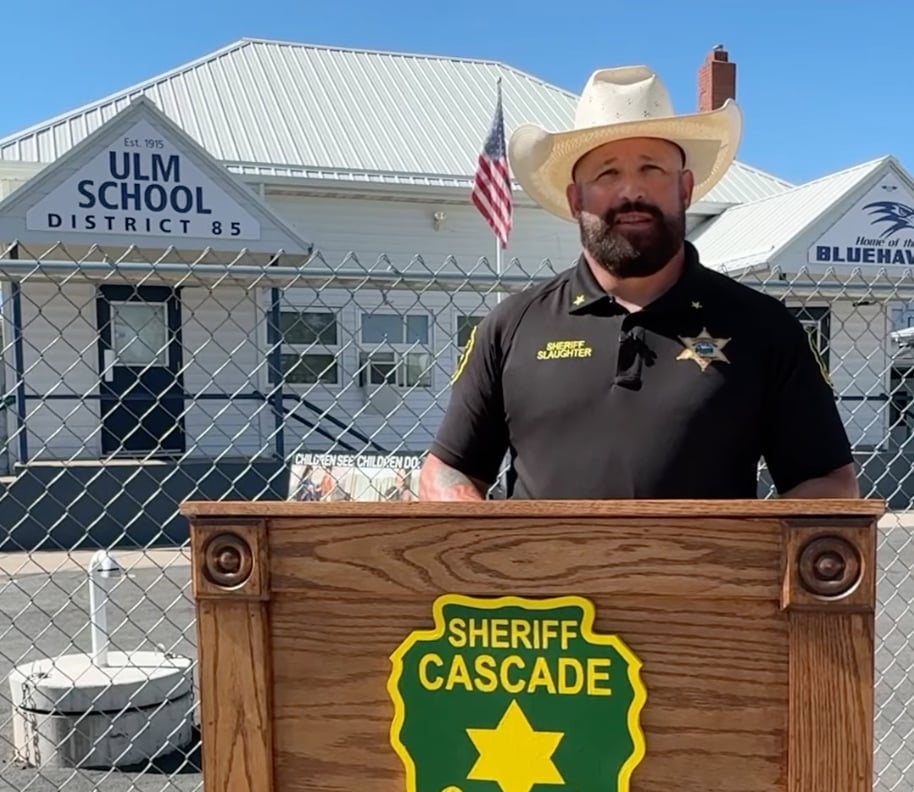
How Cascade County Rebuilt School Emergency Response
From 911 Delays to Instant, Countywide Emergency Coordination
Across Cascade County, Montana, school emergency response once depended on a single action: someone placing a 911 call. Teachers, administrators, dispatchers, and deputies relied on manual relays, verbal descriptions, and fragmented communication to manage high-pressure situations.
When minutes mattered most, information moved too slowly.
For Sheriff Jesse Slaughter, the limitations of that approach were clear. Emergency response depended on people communicating perfectly under stress—without a shared system, shared visibility, or real-time coordination.
That gap wasn’t just inefficient. It was dangerous.
Background: Emergency Communication Before Modernization
Before Cascade County modernized its approach, emergency communication followed a familiar but fragile pattern. A teacher identified a threat and dialed 911. Dispatch verified details. Information was relayed to responding units. Deputies arrived with limited situational awareness and little context beyond what could be communicated verbally.
Even on routine school days, the friction was apparent. During a countywide drill the previous year, the system reached its breaking point. Staff were unsure who had called 911. Deputies were uncertain where the alert originated. Administrators attempted to track classroom status through radios and runners. Rumors traveled faster than verified information.
Sheriff Slaughter later reflected on the experience:
“We were getting information slower than the situation was unfolding. Response time is the key.”
The drill exposed a critical reality: the system could not keep pace with the speed of a real emergency.
The Challenge: Human-Dependent Emergency Coordination Under Pressure
Before E3, deputies typically received emergency notifications 2.5 to 5 minutes after an incident began. That delay wasn’t caused by technology failure—it was procedural.
Teachers dialed 911. Dispatch verified details. Information was relayed manually. By the time officers were en route, conditions on campus had often changed.
Floor plans were not universally accessible. Room locations had to be described verbally. During lockdowns, administrators relied on radio check-ins or physically moving through buildings to determine which classrooms were secure.
As Sheriff Slaughter explained:
“We were relying on people to communicate perfectly under pressure. That’s not realistic.”
The system depended on humans working around the tools rather than being supported by them.
The Search for a Better School Emergency Response System
Cascade County needed a fundamentally different approach—one that eliminated delays between recognizing a threat and notifying those responsible for responding.
The Sheriff’s Office evaluated solutions with several non-negotiable requirements:
- Law enforcement needed to receive alerts instantly
- Every classroom had to be visible on a digital map
- Teachers needed a simple way to check in during lockdowns
- Emergency communication had to live in a single system
E3 emerged as the platform capable of unifying the entire response process—from the first alert through incident resolution and after-action review.
What began as a search for faster alerting quickly became a broader effort to modernize school emergency response countywide.
What Cascade County Implemented
The countywide rollout of E3 replaced manual workflows with a real-time, integrated school emergency communication system.
Implementation included:
- Instant emergency alerts sent directly to deputies, dispatch, and school resource officers
- Room-level digital maps for participating schools
- Two-way communication connecting school staff and law enforcement
- Live check-in tools for teachers to indicate safety status
- Systemwide integration with first responder teams
- Automated after-action reports following drills and incidents
- Joint training for school staff and law enforcement
Instead of relying on a chain of human relays, emergency response became a single, shared workflow.
Real-World Test: Great Falls High School
The impact of the system became clear during a real on-campus safety incident at Great Falls High School.
The alert was sent instantly. Deputies received it in under two seconds—along with the exact room where the issue originated. By the time officers were en route, the school had already initiated lockdown procedures without hesitation or confusion.
As deputies arrived, the digital floor plan updated in real time, providing a clear path into the building and precise location context. Inside, teachers checked in, marking themselves and their students safe or requesting assistance.
What previously took long minutes of relays and clarification unfolded in a coordinated sequence. The building was swept and secured in approximately ten minutes.
Undersheriff Lance Boyd noted the difference:
“It gave us exactly the level of coordination we’d been trying to achieve.”
Results After Implementing a Countywide School Emergency System
The shift across Cascade County was immediate.
Alerts that once took minutes now reached deputies in seconds. Officers arrived with room-level detail already available, replacing guesswork with targeted response. Teachers checked in quickly, giving command staff real-time visibility without radios or runners.
Drills became more meaningful and realistic. Administrators, deputies, and educators operated from a shared source of truth, reshaping how preparedness was understood across the county.
Most importantly, the system proved itself during a real incident. A response that once required extended coordination was completed decisively and efficiently.
Cascade County didn’t just improve response time. It fundamentally strengthened its readiness.