
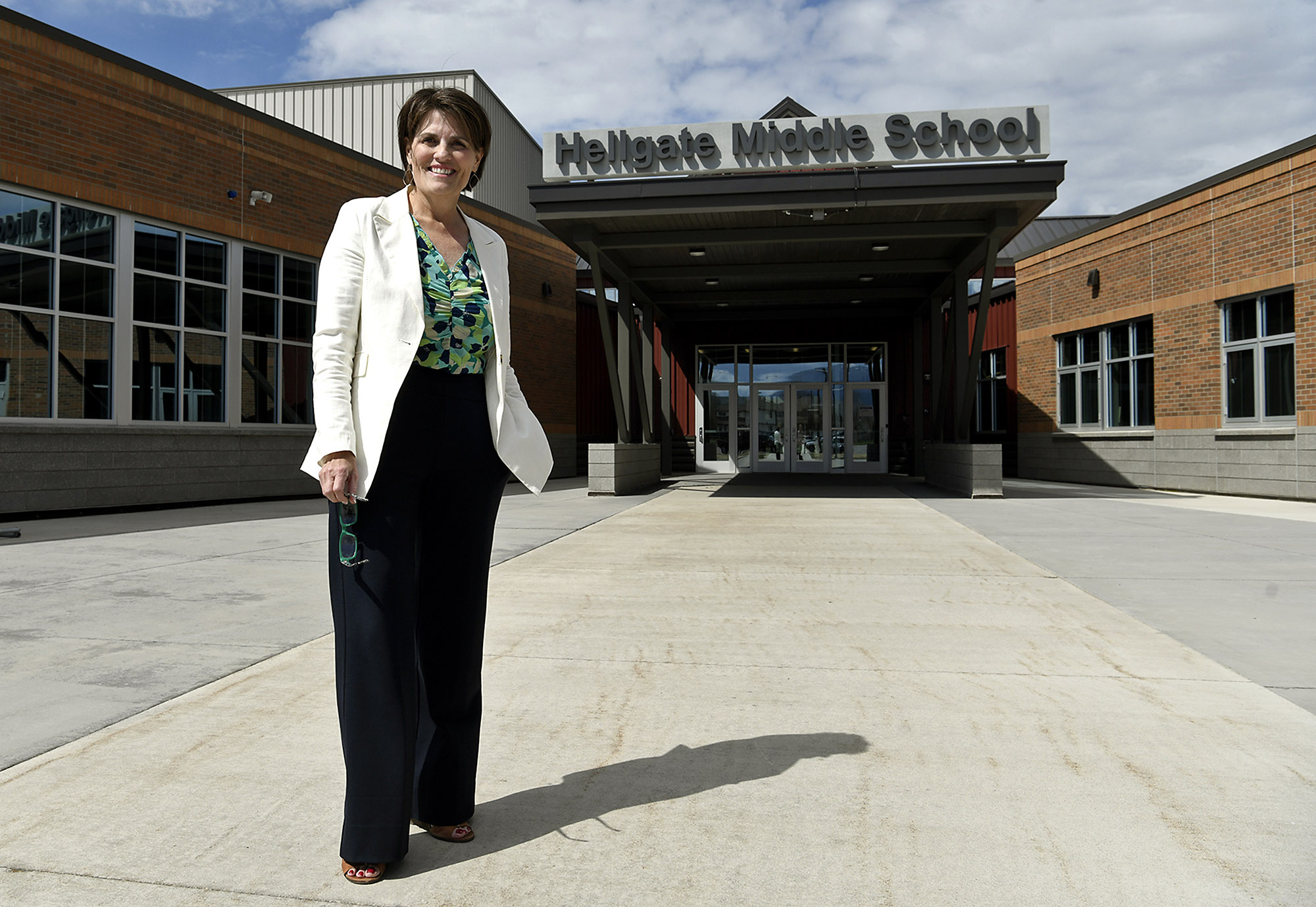
Hellgate Elementary School District—one of Montana’s largest elementary districts—to modernize K–12 emergency communication and response across a five-building campus. Prior to implementation, the district relied on slow, manual, and inconsistent methods that made it difficult to notify staff quickly, verify student safety, or coordinate effectively during emergencies.
Under the leadership of Superintendent Dr. Molly Blakely, Hellgate adopted E3 to enable real-time alerts, unified emergency communication, room-level mapping, and live staff and student accountability. The impact was immediate. The platform has since supported the district through two real-world lockdown incidents, enabling faster decision-making, immediate staff updates, and rapid identification and location of missing students.
As Dr. Blakely summarized the impact:
“I don’t know what we would have done without the E3 app. It’s been a complete game changer for us.”
Emergency Communication Challenges in a Multi-Building K–12 Campus
Hellgate Elementary operates on a shared campus consisting of five separate school buildings. While the layout offers flexibility, it also introduces significant visibility and communication challenges during school emergencies. When Dr. Blakely stepped into the superintendent role, she identified a critical gap: there was no systematic, instantaneous way to alert staff or coordinate across the entire campus in real time.
E3 was selected because it could deliver immediate campuswide emergency alerts, provide building- and room-level mapping, allow staff to check in from any location, and enable off-site leadership to monitor incidents as they unfolded. The platform also provided first-responder access information, which the district previously lacked.
Challenges With Emergency Communication Before E3
Slow, Manual Emergency Alerts
Before E3, emergency communication varied widely depending on the situation. Alerts were often relayed verbally, through phone calls, or via building-level announcements. There was no reliable way to notify all five buildings simultaneously, and staff who were outside their classrooms—or administrators who were off campus—could easily miss critical early information.
As Dr. Blakely explained:
“We didn’t have a systematic or instantaneous way to alert everyone on campus. That had to change.”
Limited Situational Awareness During Crisis
Administrators had no real-time visibility into staff or student status across buildings. During drills or incidents, locating missing students could take several minutes, and response teams struggled to determine which building or section was affected. Information was fragmented and often outdated by the time it reached decision-makers.
Fragmented Staff Coordination
During lockdowns or emergency drills, teachers reported status through a patchwork of phone calls, texts, or runners. There was no single communication thread tying together teachers, administrators, and district leadership. As a result, information arrived inconsistently and occasionally contained errors.
Delayed First-Responder Access
First responders also faced challenges. Keys were not centrally accessible, and building layouts or room information were not readily available. The district later learned from responders that even small access delays can have major consequences during emergencies.
Emergency Response Baseline Before E3
Before modernization, campuswide alerts could take anywhere from one to five minutes to reach staff. Accountability was manual and incomplete, building access for responders was delayed, and location precision depended heavily on verbal descriptions or radio communication. Unified emergency communication did not exist.
Implementing a Real-Time School Emergency Notification System
Hellgate deployed E3 as a comprehensiveK–12 emergency response platform rather than a single-point tool. The rollout included instant campus-wide alerting across all five buildings, detailed digital mapping of interiors, real-time staff and student check-ins, and integrated chat for live communication. District leadership gained the ability to monitor incidents remotely, including when Dr. Blakely was off campus.
The district also installed external lock boxes with building keys for first responders, conducted joint professional development and on-site training with E3, and adopted automated reporting tools for drills and incidents.
Dr. Blakely highlighted the rollout experience:
“Their professional development is absolutely stellar. They understood our campus, listened to our needs, and had solutions within days.”
Transformation: How E3 helped locate missing students.
One of the earliest real-world tests of E3 occurred during a complex dismissal window. Buses were arriving for early release at two buildings while two other buildings were still in full session. At that exact moment, police issued a lockdown alert due to a potential threat near campus.
The alert reached every staff device instantly. Teachers checked in right away, allowing administrators to assess building status within seconds. Two students did not check in—they had hidden inside a playground tunnel after hearing the alarm.
Using E3’s chat feature, staff quickly identified which students were missing and where they were likely located. Search personnel were dispatched immediately and located the students within minutes.
Dr. Blakely reflected:
“Without that chat feature, it would’ve taken significantly longer to figure out who was missing and where they might be.”
Transformation: A Real Lockdown With an Armed Threat Nearby
In a second, higher-stakes incident, police notified Dr. Blakely of an armed individual in the area. Although she was off campus at the time, E3 allowed her to view staff check-ins, live mapping, and building status remotely.
Staff received the lockdown alert instantly and used the platform to share updates in real time, helping them keep students calm. Administrators could see that all buildings were green on the map, confirming the threat was not inside any school. Communication with parents was faster, more consistent, and easier to manage.
After the incident, staff feedback was consistent:
“We always felt informed.”
For Dr. Blakely, the value was unmistakable:
“I don’t know what I would have done without the E3 app. It gave us a single, reliable way to communicate when it mattered most.”
Results After Implementing E3 for K–12 Emergency Response
-
Emergency alerts now reach all five buildings in seconds
-
Staff and student accountability is immediate and visible
-
Administrators rely on one unified emergency communication channel
-
First responders gain faster access and precise location data
-
Drills are more realistic, data-driven, and effective
-
Staff confidence during emergencies has increased significantly
Conclusion: A Modern Emergency Communication System for K–12 Schools
Hellgate Elementary’s transition to E3 replaced fragmented communication with real-time visibility, instant alerts, and coordinated emergency response across a multi-building campus.
As Dr. Blakely concluded:
“E3 has absolutely been the answer to all of our needs on campus.”