
Modernizing School Emergency Preparedness With Real-Time Communication
Stanford Montana School District modernized its approach to school emergency preparedness by implementing E3’s real-time emergency communication and drill management system. Prior to adoption, the district relied on manual alarms, basic PA announcements, and paper-based documentation—methods that limited speed, realism, and coordination during both drills and real incidents.
After deployment, the district gained instant communication across staff and local authorities, centralized drill tracking, and real-world validation during an unexpected fire alarm. The transition improved response clarity, reduced administrative burden, and increased staff confidence in emergency procedures.
Background: Emergency Preparedness in a Rural K–12 District
Superintendent Craig Crawford oversees safety operations for Stanford Montana School District, a rural community where cold weather, limited staffing, and longer emergency response times heighten the importance of fast, reliable communication.
The district needed a modern K–12 emergency management system that reduced friction for staff while improving the accuracy, coordination, and realism of both drills and real incidents. Any solution also had to be intuitive enough to support adoption without disrupting daily routines.
Challenges With Emergency Preparedness Before E3
Manual, Low-Realism Drills
Fire drills were initiated by physically pulling alarms or making PA announcements. While procedurally sufficient, these drills lacked realism and could not simulate modern emergency scenarios or decision-making conditions.
Fragmented Emergency Communication
Staff communication depended on physical presence and the PA system. There was no unified, district-wide method to send urgent alerts or share updates in real time during drills or unexpected events.
Time-Consuming Documentation
Drill records were compiled manually at the end of the year. Information was scattered across notes and emails, making it difficult to maintain accurate records or assess preparedness trends.
Staff Hesitation Around Change
There was concern that adopting a new emergency platform could add complexity or disrupt established routines.
As Superintendent Crawford described:
“Our drills consisted of us pulling a fire alarm… or just making an announcement.”
“Anytime a school is taking on a new initiative, there’s always pushback.”
Emergency Preparedness Baseline Before Modernization
- Communication speed depended on PA announcements, with frequent delays
- Drill realism was limited and procedural
- Documentation was manual, time-consuming, and difficult to consolidate
- Staff readiness was impacted by inconsistent communication
What Stanford Implemented
To modernize emergency preparedness, Stanford deployed E3 as a comprehensive solution rather than a single-purpose tool.
- District-wide implementation of E3’s emergency communication and drill management platform
- Digital mapping of school facilities with support from E3’s team
- Guided staff training with walkthroughs and live practice sessions
- Scenario-based drill scheduling to increase realism
- Direct communication channels connecting staff and local authorities
Real-World Validation: An Unexpected Fire Alarm
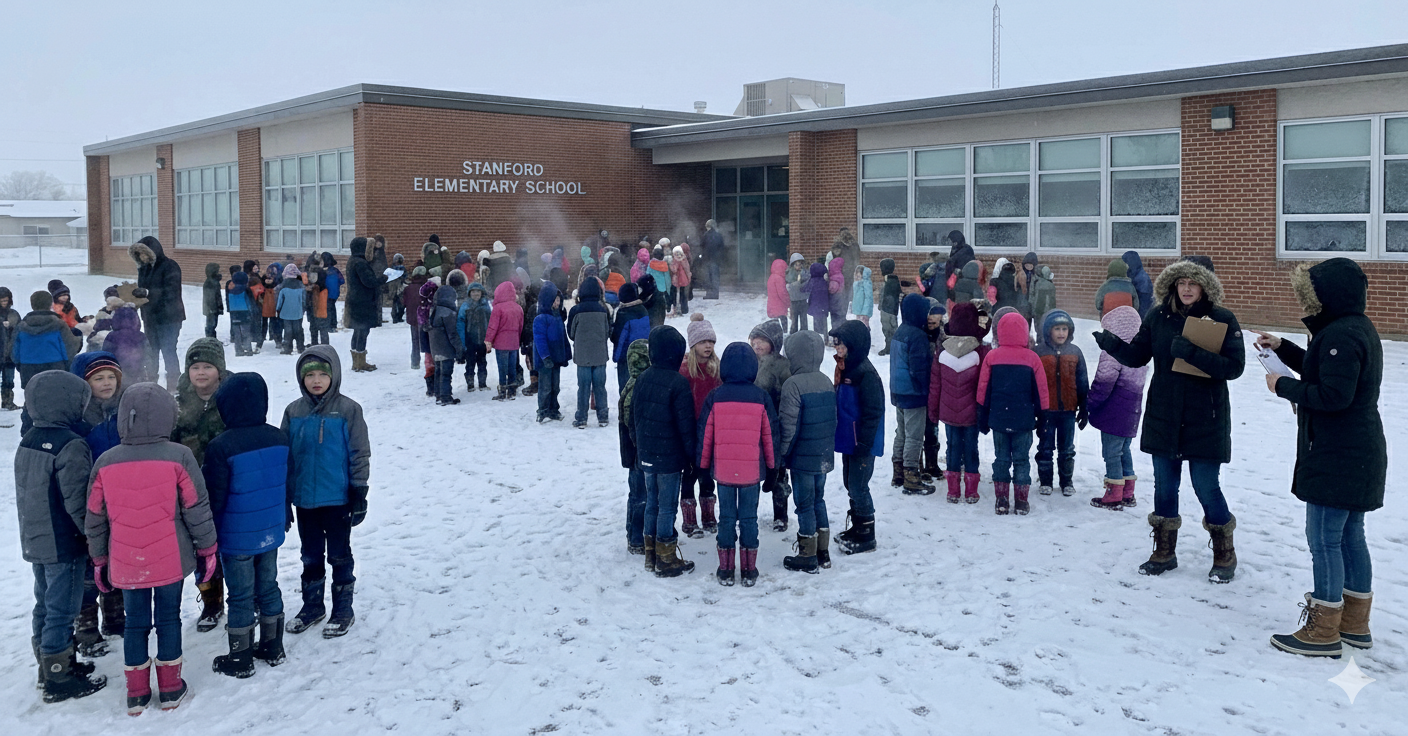
The system was tested during an unplanned incident when a gym sensor triggered a fire alarm on a freezing Montana day. As students evacuated outdoors, Superintendent Crawford had no immediate confirmation whether the alarm was real or false.
After determining it was a false alarm, he used E3 to instantly notify both staff and local authorities, preventing confusion and accelerating the return indoors.
The incident demonstrated the value of real-time emergency communication compared to manual alarms or PA announcements.
“I was able to alert the local authorities as well as my staff that it was a false alarm.”
“It was a cold Montana day, so it helped us get back inside in a hurry.”
“They really helped minimize pushback by making it as simple as possible.”
Results After Implementing E3
Faster Emergency Communication
Real-time alerts now enable immediate, campus-wide messaging during drills and unexpected events.
More Realistic Emergency Drills
Scenario-driven exercises replaced procedural walkthroughs, improving preparedness and engagement.
Automated Documentation
All drills are logged within the platform, eliminating year-end administrative burden.
“It lets us keep track of when we’ve had the drills. It’s nice to have that all in one place.”
Higher Staff Adoption and Confidence
Concerns about complexity faded thanks to guided training and responsive support.
“I can’t recommend them enough. They’ve been very responsive to everything we’ve needed.”
Conclusion: Modern Emergency Readiness for Rural Schools
Stanford Montana School District replaced manual, fragmented workflows with real-time communication, realistic training, and centralized documentation.
The system proved its value during a real incident, delivering clarity, speed, and coordination when it mattered most.